7 Steps to Brand Orders
How Can OEM / ODM Manufacturers Win Direct Brand Orders?
A faithful English reading version of the Brand Orders Seven-Step Method: positioning, target selection, visibility, direct engagement, value translation, negotiation and repeatable delivery.
Introduction:
People in manufacturing all know that the golden age of manufacturing has passed. It did not just end today; it has been declining for several years. Competition inside and outside the inner circle has been intensifying, orders are increasingly difficult to win, margins are becoming thinner, and payment terms are getting longer and longer.
What is even more unsettling is that external environmental uncertainty is becoming the norm. A 2026 report from the United Nations Conference on Trade and Development indicates that global merchandise trade growth will slow from 4.7% in 2025 to a range of 1.5% to 2.5% in 2026 (United Nations Conference on Trade and Development, 2026). World Bank data show that global trade growth in 2025 is expected to be only 1.8%, a near ten-year low (World Bank, 2025). The World Economic Forum’s report points out that global value chains have entered an era of structural volatility; tariff escalations among major economies in 2025 have reconfigured more than USD 400 billion of global trade flows, while disruptions on major shipping routes pushed container shipping costs up 40% year-on-year (World Economic Forum, 2026). Geopolitical risk has evolved from occasional "black swan" events into high-frequency, high-impact "grey rhinos," making uncertainty the most unpredictable yet unavoidable core variable in global production and supply chain adjustments (Economic Daily, 2026).
Yet strangely, there are always some companies that, no matter how the environment changes, remain busy and cannot finish their orders. Their equipment may not be the newest, their scale may not be the largest, and their prices may not be the lowest, but brand companies still choose to work with them. What exactly are they doing right?
This article attempts to answer that question. Not from theory, but from the actual decision logic of brand-side procurement.
What are brand-side companies actually choosing? Before discussing the seven-step method, we must clarify one core point: brand-side companies are not just procuring products; they are choosing suppliers who can stably deliver, manage risk, meet requirements, and sustain cooperation.
B2B International’s three consecutive years of research consistently show that trust — defined by buyers as "feeling secure at the time of signing" — is the strongest driver of B2B choice, ranking first and ahead of price, innovation, and functional performance (B2B International, 2026). Buyers are primarily concerned with risk management, not the lowest price. Domestic research further reveals the particular mechanisms of trust in the Chinese context. Research based on the China Entrepreneur Survey System shows that Chinese entrepreneurs emphasize relationship-specific, personalized trust when assessing the credibility of business partners, focusing on personalized communication and goodwill, manifesting in respect and reciprocity (ScienceDirect, 2025). Bilateral trust reduces search costs, contract costs, and management and supervision costs, thereby promoting cooperation between firms and non-local suppliers (Xiamen University, 2025).
Globally, 78% of manufacturing buyers report that procurement cycles have lengthened compared to last year; technical expertise and innovation capability have become primary considerations, but trust remains the ultimate decision factor (B2B International, 2026). This means that OEM/ODM companies’ competitiveness lies not only in technology and capacity, but also in whether they can make brand-side companies believe "this company is worth long-term cooperation."
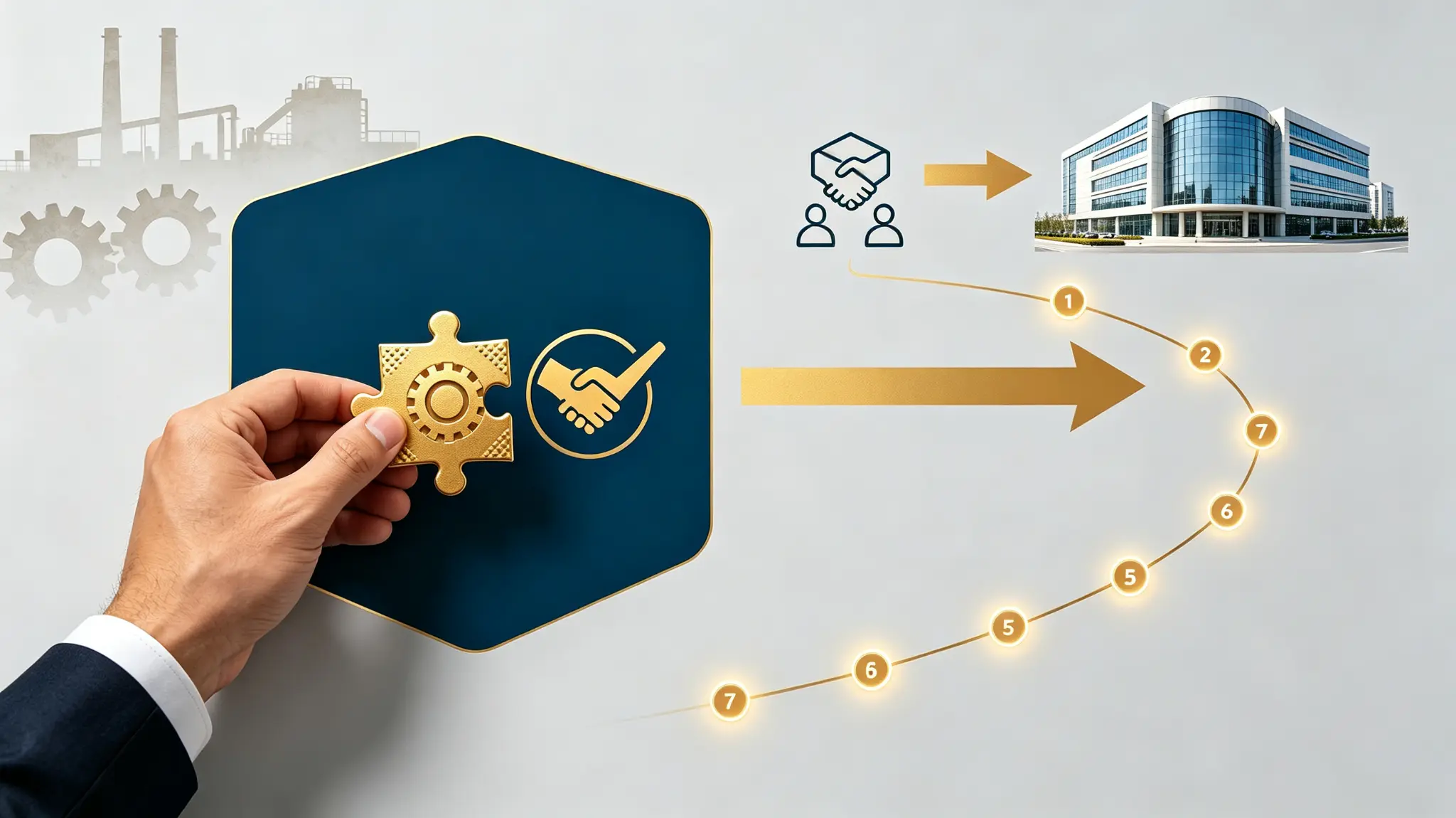
Seven-Step Method for Brand Orders The following seven-step method is a framework to help OEM/ODM companies systematically move toward direct brand orders. Each step includes a general practical reminder, but specific implementation needs to be customized according to the company’s own situation. If you need an in-depth understanding, please contact us.
Step 1: Brand Positioning / Brand Positioning The core of brand positioning is to clearly answer "Who are we, whom do we serve, and what problem do we solve?" Companies should not only describe equipment and capacity, but position themselves as "suppliers who can help brand companies solve specific problems."
Practical reminder: Brand positioning needs to be systematically sorted out by combining the company’s existing capabilities, the target brand’s needs, and the competitive environment. This process usually requires external professional perspective and assistance. If you want to learn specific methods, please contact us.
Step 2: Target Selection / Target Selection Company resources are limited; it is impossible to approach all brand companies. The goal of target selection is to identify the "best-matched" brand companies — including industry relevance, procurement needs, decision chain structure, etc.
Practical reminder: Screening target brand companies involves multiple dimensions such as industry fit, procurement cycle, and decision chain, and requires systematic analysis methods and tools. If you want to learn specific operations, please consult further.
Step 3: Multi-channel Visibility / Multi-channel Visibility Brand-side companies will not proactively search for unknown suppliers. Companies need to establish a sustained professional presence through Douyin, Xiaohongshu, WeChat Channels, industry exhibitions, industry media, and other channels. Mainland manufacturers should especially pay attention to operating Douyin enterprise accounts and Xiaohongshu enterprise accounts. In 2026, Xiaohongshu’s monthly active users exceeded 350 million, B-side search volume increased by 62% year-on-year, B2B-related search terms increased by over 90% year-on-year, and 70% of users consider Xiaohongshu as a pre-purchase decision reference platform (HuCheng, 2026). On the Douyin platform, Hebei Boang Automobile’s full-year sales in 2025 reached RMB 350 million, of which 85% of orders came from online livestream rooms and 70% of customers were from other provinces (Economic Daily, 2026). Shijiazhuang Kelin Electric held 110 livestreams in 2025, obtaining nearly 1,200 valid sales leads and directly driving contract signings of nearly RMB 20 million (Hebei News Network, 2026).
Practical reminder: How to choose channels that overlap with target brand companies, how to design effective exposure content, and how to convert online traffic into actual orders all need to be customized according to the company’s situation. If you need guidance, please contact us.
Step 4: Direct Engagement / Direct Engagement Skipping intermediaries and directly establishing contact with brand-side procurement decision-makers is key to obtaining direct orders. This requires understanding the brand-side decision chain and preparing corresponding engagement scripts.
Practical reminder: The brand-side decision chain usually includes procurement, supply chain, and quality departments, and different departments focus on different points. How to identify key decision-makers, how to prepare differentiated communication materials, and how to control the engagement rhythm all require professional guidance. If you need to learn more, please consult further.
Step 5: Value Translation / Value Translation This is the step OEM/ODM companies most often overlook. Companies habitually list technical specifications, but brand-side companies need to know "how those specifications translate into quality, cost, supply risk, compliance, and supply continuity."
This translation is particularly critical regarding ESG compliance. Apple plans to achieve production supply chain "carbon neutral" by 2030; suppliers participating in Walmart’s "Project Gigaton" are required to disclose carbon footprint data. The EU CBAM was officially implemented in 2026, and electronic contract manufacturers must also face multiple pressures of "Scope 3 + customer audits + digital product passport" (21st Century Business Herald, 2026). Brand-side companies’ ESG compliance requirements are being transmitted layer by layer to the end of the supply chain. If a company can translate capabilities such as carbon footprint management and labor rights protection into language the brand-side understands — "reduced supply risk" and "brand reputation protection" — it can gain an advantage in competition.
KPMG’s 2026 report shows that 49% of industrial manufacturing enterprises already have mature AI application scenarios continuously producing commercial value, and 68% of manufacturing enterprises plan to complete enterprise-wide large-scale AI deployment within the next 12 months (KPMG, 2026). But the value of technology investment must be perceived by brand-side companies in order to truly convert into orders.
Practical reminder: How to translate technical specifications, capacity data, and ESG capabilities into value language that brand-side companies understand needs to be customized according to the company’s specific products and target brand companies. This usually requires professional guidance. If you want to learn specific methods, please consult us.
Step 6: Commercial Negotiation / Commercial Negotiation Brand-side procurement staff face pressures not only of price, but also of supply risk, switching costs, and delivery confidence. Companies should establish value anchors based on total cost of ownership, switching risk, delivery confidence, and cooperation terms, rather than respond solely with price reductions. Low price does not equal orders — B2B International’s three consecutive years of research consistently show that trust (i.e., "feeling secure at the time of signing") is the strongest driver of B2B choice, ranking ahead of price (B2B International, 2026).
Practical reminder: The core of negotiation is "reducing the brand-side’s switching costs." How to design negotiation strategies based on the brand-side’s specific concerns, how to establish value anchors, and how to win orders without reducing price all require professional guidance. If you want to learn more, please consult further.
Step 7: Repeatable Delivery / Repeatable Delivery Obtaining the first order is only the beginning. Companies need to build an operational system capable of continuous delivery, continuous improvement, and continuous response to brand-side needs to upgrade from a "trial supplier" to a "strategic partner."
Practical reminder: How to establish a 24-hour response mechanism, how to conduct regular performance reviews and improvements, and how to upgrade the customer relationship from transactional to strategic all require systematic methods. If you need guidance, please contact us.
Conclusion For OEM/ODM companies to move from contract manufacturing capability to direct brand orders is not an overnight process, but a business transformation that requires systematic planning. The Seven-Step Method for Brand Orders provides a framework to help companies prepare step by step, approach brand-side companies, build trust, and deliver continuously.
If you want to understand your company’s priority gaps in brand-side entry, please download the sample report or complete the free "Brand-side Order Entry Assessment Questionnaire."
FAQs Q1: Must the seven-step method be executed in order? A1: It is recommended to proceed in order because each step builds on the previous one. However, companies may adjust the pace according to their own situation.
Q2: Is the seven-step method suitable for small and medium-sized OEM/ODM companies? A2: Yes. The seven-step method is a general framework; small and medium-sized enterprises can adjust execution methods according to their own resources and scale.
Q3: Does value translation mean giving up technical details? A3: No. Technical details remain important, but they need to be "translated" into the commercial value that brand-side companies care about.
Q4: How does the Seven-Step Method for Brand Orders differ from general sales methods? A4: The seven-step method is from the brand-side procurement perspective, not from sales technique perspective. It emphasizes "being seen, understood, trusted, and chosen by brand-side companies."
Q5: Besides helping me connect with brand-side companies, can you provide guidance in other areas? A5: Certainly. In addition to assisting companies in obtaining brand-side orders, we also provide operational optimization guidance, including supply chain and sales-side restructuring, cost compression, and organizational structure optimization. If a company has technology but lacks market channels, we can help monetize the technology; if a company wishes to transition from contract manufacturing to branding, we can provide capacity transformation advice; if a company is considering expansion, merger, split, or exit, we can also provide capital transaction support.
Q6: Many manufacturers believe "If I give the best price, I can get the order" — is this view still valid? A6: This view is outdated. B2B International’s research shows that trust has been the strongest driver of B2B choice for three consecutive years, ranking ahead of price (B2B International, 2026). We recommend that companies compete on value anchors rather than price wars to win orders.
Internal Link Suggestions Further reading: Manufacturing Transformation: From Contract Manufacturing Capability to Brand-side Orders (link to /manufacturing-transformation)
Return to homepage: Expert Connected Hong Kong Limited (link to /)
Free assessment: Brand-side Order Entry Assessment Questionnaire (link to /survey)
References National Bureau of Statistics (2025 industrial enterprise profit data): https://www.stats.gov.cn/sj/zxfb/202601/t20260127_1962382.html
Hong Kong Productivity Council (Hong Kong Manufacturing Industries Development Study Report, 2024): https://www.hkpc.org/zh-HK/about-us/media-centre/press-releases/2024/hong-kong-manufacturing-industries-development-study-report
Coface (Coface APC Payment Survey 2026: Longer payment terms do not shield Chinese firms from payment delays): https://www.coface.com.cn/news-economy-and-insights/coface-apc-payment-survey-2026-longer-payment-terms-do-not-shield-chinese-firms-from-payment-delays
B2B International (2025 Superpowers Index, 2026): https://www.b2binternational.com/2026/06/05/trust-number-1-driver-of-b2b-choice/
Huang Qunhui, Ye Qichu (2025). Research on the "Involution-style" Competition Phenomenon and Its Formation Mechanism in China’s Manufacturing Industry. Reform, 2025(6):13-27. https://www.50forum.org/portal/article/index.html?id=11243
IIM Information (2026). Panorama Analysis Report on the Global and China Manufacturing Digital Transformation Market Prospects. http://www.iim.net.cn/80/view-347827-1.html
KPMG (2026). 2026 Global Industrial Manufacturing Technology Report. https://finance.sina.cn/2026-05-26/detail-inhzfmyq1487184.d.html
Toutiao (2026). Analysis of 2026 Interim Reports of Listed Companies in the Textile and Apparel Sector. https://www.toutiao.com/article/7682606785869382184/
Economic Daily (2026). The Workshop Is Also a Livestream Room. https://paper.ce.cn/pc/content/202605/24/content_312345.html
Hebei News Network (2026). "Starting the 15th Five-Year Plan: Hebei Industrial Goods Expand Markets 'in the Cloud'." https://m.hebnews.cn/
Beijing Daily (2026). From Screws to Heavy Trucks, Hebei Industrial Goods "Sell Globally" via Cloud-based Sales. https://news.bjd.com.cn/
HuCheng (2026). Xiaohongshu B2B Operation Strategy. https://www.givegroup.cn/knowledge/new-media-operation-strategy/xiaohongshu-b2b-keyword-strategy/
China Standards Service Network (2025). T/GDFCA 085-2025 Technical Guidelines for Supplier Quality Management of Industrial Enterprises. https://cssn.net.cn/
Xiamen University (2025). Bilateral Trust and the Construction of a Unified Market — From the Perspective of Suppliers’ Cross-regional Layout. https://ces.xmu.edu.cn/
ScienceDirect (2025). Trust-distrust balance: trust ambivalence in Sino-Western B2B relationships. https://www.sciencedirect.com/
Yili Co. (2025). 2025 Sustainability Report. https://www.9fzt.com/
21st Century Business Herald (2026). ESG and Contract Manufacturing Enterprises. https://finance.eastmoney.com/a/202609103870846957.html
World Economic Forum (2026). Global Value Chains Outlook 2026. https://www.weforum.org/press/2026/01/global-supply-chains-enter-era-of-structural-volatility-world-economic-forum-report-finds/
United Nations Conference on Trade and Development (2026). Trade and Development Prospects 2026. https://unctad.org/publication/trade-and-development-prospects-2026
World Bank (2025). Global Economic Prospects. https://www.worldbank.org/en/publication/global-economic-prospects
Economic Daily (2026). Uncertainty Accompanies Global Production and Supply Chain Adjustments. https://www.163.com/dy/article/KUD9E1S40519AKBM.html
Zhou Weifu (2025). The Connotation and Practice Path of High-quality Development in the New Era of Industrial Economy. Institute of Industrial Economics, Chinese Academy of Social Sciences. http://www.71.cn/2025/1013/1274774.shtml
Continue reading: Manufacturing Transformation: From OEM Capability to Brand Orders
Original Article References
The links below are retained from the two user-supplied source articles for reader reference.
- 国家统计局(2026):2025年全国规模以上工业企业利润数据
- 香港生产力促进局(2024):香港制造业发展研究报告
- Coface(2026):亚太企业付款调查
- B2B International(2026):Trust is the number one driver of B2B choice
- UNCTAD(2026):Trade and Development Prospects
- World Bank(2025):Global Economic Prospects
- World Economic Forum(2026):Global Value Chains Outlook
- 《改革》(2025):中国制造业“内卷式”竞争现象及其形成机制研究
- 中国标准服务网(2025):工业企业供应商质量管理技术指南
- 厦门大学(2025):双边信任与统一大市场建设
- Apple(供应链碳中和承诺)
- Walmart Project Gigaton